Why Small, Well-Designed Homes Feel Better Than Big Ones.
For decades, the housing conversation has been dominated by one simple assumption: bigger is better. More bedrooms. More bathrooms. More square metres to justify the investment. Floor plans ballooned, garages grew wider, hallways got longer, and homes quietly expanded outward and upward, often without much thought given to how those spaces would actually feel to live in.
But something interesting has happened over the past decade. Despite having more space than ever before, many people feel less connected to their homes. Rooms sit unused. Maintenance becomes overwhelming. Houses feel impressive on paper yet strangely hollow in real life.
And at the same time, there’s been a noticeable shift: a growing appreciation for smaller homes that are designed exceptionally well. Not tiny for the sake of it. Not minimal as a trend. Just homes where every square metre works harder, feels better, and supports the way people genuinely live.
In our experience, some of the most loved, lived-in, and emotionally satisfying homes aren’t big at all. They’re thoughtful. They’re intentional. And they quietly prove that space is about quality, not quantity. We explore the many reasons below why smaller, better-designed homes are something to consider if you're thinking of building.
Space isn’t measured in square metres; it’s measured in how it feels.
We’ve all been in large houses that somehow feel awkward, tight, or uncomfortable. Rooms that are technically generous but emotionally cold. Corridors that stretch on without purpose. Spaces that look impressive yet never quite invite you to settle in. That’s because space isn’t just physical, it’s experiential.
A well-designed small home understands proportion, movement, light, and rhythm. It anticipates how you’ll arrive home, where you’ll drop your bag, how the house wakes up in the morning, and where it softens in the evening. When design is done well, a smaller footprint can feel surprisingly expansive. Sightlines are considered. Spaces overlap visually. Indoor and outdoor areas blur. Ceiling heights shift to create moments of compression and release. You don’t feel like you’re moving through a house; you feel like the house is moving with you.
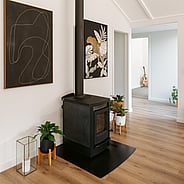
One striking example in our Radley Design portfolio is the Palm Springs residence, a contemporary family home in Papamoa Beach. While the home is not oversized, it maximises spatial experience through careful planning and abundant natural light. High raked ceilings and vaulted entryways bring light deep into the home, making each space feel generous and connected despite a modest footprint. The magic of space here isn’t in scale, it’s in how the spaces feel and connect. The arrangement of rooms and the way light penetrates living areas create an openness that belies the home’s relatively restrained square metre count.
This kind of spatial intelligence is powerful. It shows that a smaller footprint, when designed with intention, can feel more alive and more human than a larger one that hasn’t been resolved with equal care. By contrast, poorly considered large homes often rely on size to do the work that design should be doing. And size alone is rarely enough.
Constraints make better architecture
One of the most powerful and underrated benefits of a smaller home is that it forces clarity. When space is unlimited, it’s easy to add rooms instead of re-proportioning space to function better. When space is limited, every square inch matters.
Designing a smaller home requires a deep understanding of how people actually live, not how they think they should live.
It invites questions like:
• Do we really need a separate formal living room?
• Are hallways actually needed?
• How often do we actually use a dining table for eight?
• Would we rather have two beautiful and functional bathrooms than three average ones?
• Where do we naturally gather during the day?
• What spaces do we want to feel open, and where do we crave privacy?
These conversations often lead to more honest, personal homes. Homes that are shaped around daily rituals rather than resale clichés.
Storage becomes integrated and intelligent through built-in furniture and re-thinking where things are stored…for example, moving hot cylinders into the roof cavity allows for much larger linen cupboards and extra storage space. Joinery is designed with the purpose to allow light, privacy, air flow or whatever the space needs. It is not designed as an afterthought or a simple placement. Rooms are flexible, able to shift as life changes. Nothing is accidental. And that intentionality is something you can feel immediately when you step inside.
Smaller homes encourage connection, without sacrificing retreat.
Large homes often promise privacy, but they can unintentionally create separation. Rooms and spaces that are tucked far away from shared spaces become too separated and reclusive. While this can work for some lifestyles, it can also quietly fragment daily life. People retreat earlier. Shared moments become more scheduled and less spontaneous.
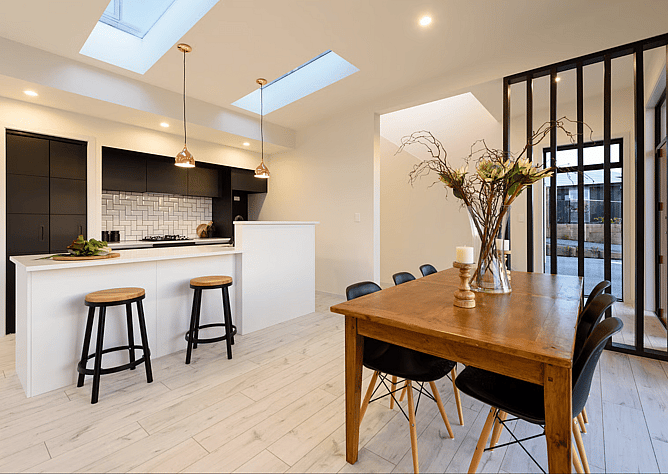
Smaller homes tend to do the opposite. They naturally bring people closer together, not through force, but through proximity and flow. The kitchen opens into the living space. Hallways can be minimised or removed entirely to decrease wasted space and integrate spaces more effectively. The dining table becomes a place for meals, homework and conversation. Outdoor areas are easily accessed and genuinely used, not just admired.
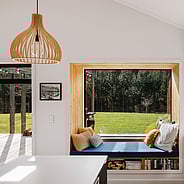
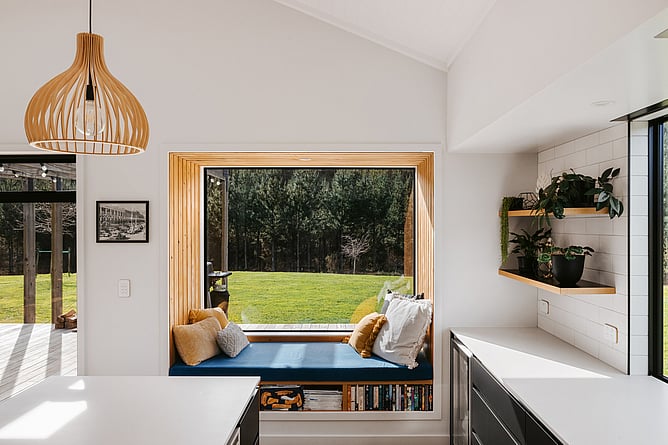
This doesn’t mean there’s no room for privacy. Good design knows how to create retreat without isolation. A bedroom positioned away from noise. A window seat tucked into a quiet corner. A change in ceiling height or material that subtly shifts the mood.
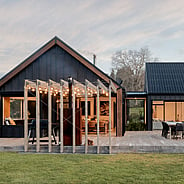
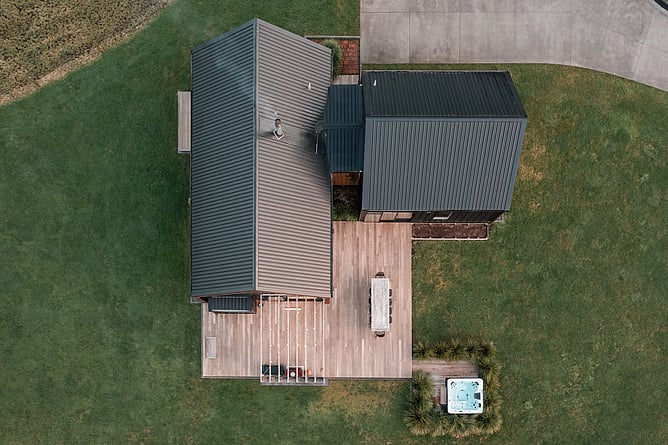
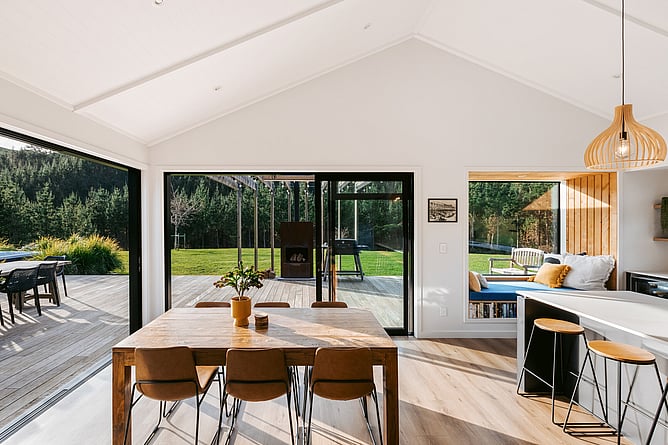
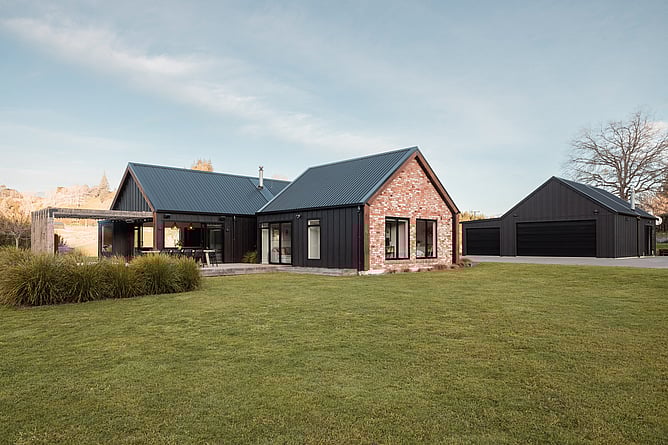
At the Radbull Black Barn design by Radley Architectural Design, the relationship between inside and outside plays a crucial role in the sense of connection. Large openings link the main living space to sheltered outdoor areas, extending daily life beyond the walls of the house. This creates a feeling of generosity without increasing the internal footprint. The home is also designed with no hallways, allowing spaces to flow and talk to others naturally, whilst still having the ability to close off for privacy and noise reduction. The result is a home that supports both togetherness and solitude, without unused space getting in the way.
Light does more work in small homes, and that’s a good thing.
In compact homes, natural light isn’t just desirable, it’s essential. When you don’t have endless rooms to rely on, light becomes a primary design tool. It shapes how spaces feel throughout the day and defines mood, warmth, and orientation.
Well-designed small homes are often deeply responsive to their environment:
• Windows are placed for sun, wellbeing, symmetry and aesthetics.
• Openings are sized for purpose, framing views, capturing warmth, or protecting privacy.
• Light is allowed to travel through spaces, not stop abruptly at walls.
A modest room flooded with morning light will always feel better than a large room that relies on artificial lighting. And because small homes demand attention to detail, these decisions are rarely generic. They’re tailored to site, climate, and lifestyle. The Radbull Black Barn design is a true testament to this, where the large kitchen window not only frames views across the farm, but welcomes a vast amount of natural sunlight in the morning to awaken the senses as coffee brews and the family has breakfast. The sun then moves its way through the home and into the outdoor area as the energy moves from morning rises to active afternoons. The home feels alive, changing subtly as the day unfolds.
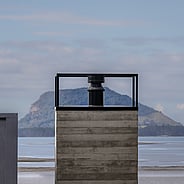
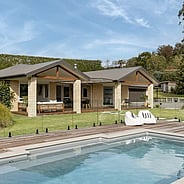
The Oikimoke Pool House, also designed by Radley Architectural Design is a contemporary project completed in 2024. It demonstrates how light and space can elevate design even in ancillary structures. With oversized sliding doors and thoughtfully positioned openings of every room, each space is deeply connected to the outdoors. Light doesn’t just enter, it participates, shaping the way the pool house feels at different times of day and seasons.
This is a simple but profound point: good design treats light as a partner, not an afterthought.
Proportion beats scale every time.
One of the biggest misconceptions in residential design is that larger spaces feel better. In reality, proportion matters far more than size. A room that’s too large can feel empty or difficult to furnish. A space that lacks human scale can feel impressive, but not comforting.
Small homes get proportion right because they have to. Ceiling heights are carefully considered. Transitions between spaces are deliberate. Furniture is integrated into the architecture rather than floating awkwardly within it.
At Radbull Black Barn, ceiling heights are varied deliberately. More intimate spaces like the bedrooms feel grounded and protected, while communal areas feature vaulted ceilings to open up just enough to feel generous without becoming overwhelming. Furniture is integrated and often built into the architecture, ensuring that spaces feel settled rather than unfinished.
When rooms are proportioned well, they feel intuitive and inviting. You instinctively know where to sit, where to gather, where to pause. The house feels balanced, resolved and right.
Better materials, not more of them.
When you’re not pouring budget into sheer size, something interesting happens: you can afford to care more about how the home is made.
Smaller homes can often allow for:
• Higher quality material
• Better craftsmanship
• Thoughtful detailing
• Furniture that’s built-in and enduring
Instead of spreading the budget thinly across too many rooms, it’s concentrated where it matters most. Floors that feel good under bare feet. Timber that ages beautifully. Handles, taps, and surfaces that are touched every day and chosen with intention. Materials can be recycled more readily because they do not need vast amounts. These details don’t shout, but they’re felt constantly. And over time, they’re what make a house feel genuinely good to live in.
Small homes are easier to live with, practically and emotionally.
Beyond aesthetics and design theory, there’s a very real, very practical side to living in a smaller home. They’re easier to heat and cool. They cost less to maintain. They require less cleaning, fewer repairs, and fewer compromises. But perhaps more importantly, they create emotional ease. There’s less pressure to “fill” space. Less guilt about unused rooms. Less time spent managing a house, and more time enjoying it. Many people are surprised by the sense of freedom that comes with living smaller. Life feels lighter. More intentional. Less cluttered, physically and mentally.
Smaller homes = greater sustainability.
Smaller homes are inherently more sustainable, but not in a performative way. They require fewer materials to build. They consume less energy over their lifetime. They encourage mindful consumption rather than excess. But good sustainable design isn’t about ticking boxes or adding gadgets. It’s about making thoughtful decisions early, orientation, insulation, durability, and longevity.
A small, well-designed home that lasts decades will always outperform a large, poorly built one filled with short-term fixes. True sustainability is quiet. It’s embedded in the bones of the building, and it often starts with choosing not to build more than you need. Think of your materials; how they make you feel, how they impact the space and how they fit within the environment both physically and mentally. Your home should make you feel good and proud about life, the environment and everything that comes with it.
Big homes impress. Small homes endure.
There’s no denying that large homes can make an impact. They photograph well. They look impressive in listings. They signal success in a very visible way, but the homes people fall deeply in love with, the ones they talk about years later, are often different. They’re the homes where mornings feel calm, spaces make sense. Life flows easily, and nothing feels wasted or unresolved.
They don’t try to impress. They don’t chase trends. They simply feel right, and more often than not, they’re smaller than expected. Small, well-designed homes have a certain confidence about them. They don’t rely on size to justify themselves. They don’t apologise for being compact. They don’t need to shout. Instead, they invite you in. They support daily life without drama. They age gracefully, adapting as life changes around them. Good design doesn’t demand attention; it earns trust.
The key takeaway.
Design isn’t about how much space you have, it’s about how that space works for you. A smaller, well-designed home doesn’t ask you to live with less. It asks you to live with intention. And when design is thoughtful, responsive, and genuinely human, less space can offer far more than square metres alone ever could.
If you’re unsure where to begin, we’re always happy to have a conversation and help you explore the possibilities. Thoughtful architectural design is what we do every day, and we genuinely enjoy finding smart ways to make smaller homes feel generous and well considered.
CONTACT US